Originally posted on May 11, 2026 @ 5:19 am
Henry Ford, an American industrialist born in 1863, is a name synonymous with innovation, mass production, and the democratization of the automobile. As the founder of the Ford Motor Company, his revolutionary approach to manufacturing transformed not only the automotive industry but also the global economy. His legacy extends beyond cars, influencing modern industrial practices and shaping the consumer landscape for generations.
While he passed away in 1947, the sheer scale of his wealth at its peak, when adjusted for inflation, makes him one of the richest individuals in human history. Understanding Henry Ford's net worth requires looking at the colossal success of his automotive empire and the groundbreaking methods he employed to achieve it.
Henry Ford Net Worth: From Garage Inventor to Global Industrialist
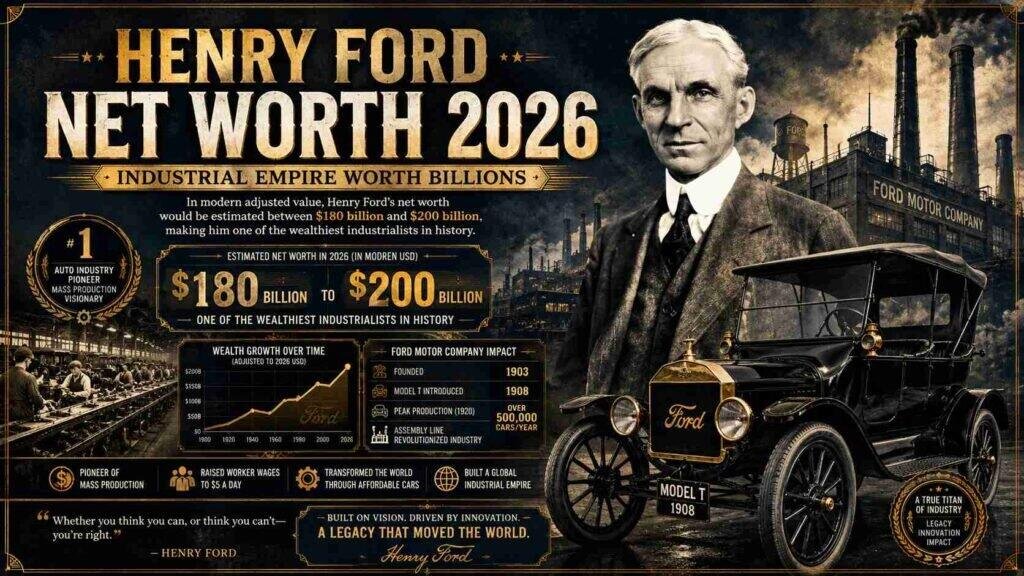
Henry Ford's net worth, estimated at an astonishing $200 billion when adjusted for inflation, primarily stemmed from his complete ownership and control of the Ford Motor Company for much of his life. This immense fortune wasn't just built on selling cars; it was forged through a radical reimagining of how products could be made and distributed. His vision for an affordable, reliable automobile, coupled with the innovative application of the moving assembly line, created unprecedented wealth. This wealth allowed him to not only become a titan of industry but also a significant, albeit controversial, figure in American philanthropy and social thought.
Quick Facts
| Born | July 30, 1863 |
|---|---|
| Died | April 7, 1947 |
| Known for | Founding Ford Motor Company |
| Key Innovation | Assembly line for mass production |
| Iconic Product | Model T automobile |
The Ford Motor Company: An Automotive Revolution
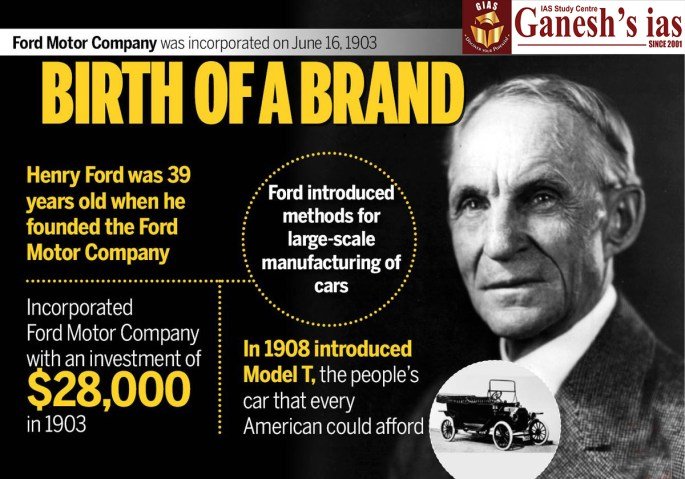
The cornerstone of Henry Ford's wealth was undoubtedly the Ford Motor Company, which he founded in Dearborn, Michigan, in 1903. What started as a small venture quickly grew into a global powerhouse, thanks to Ford's relentless pursuit of efficiency and affordability. The company's breakthrough came with the introduction of the Model T in 1908. This robust and relatively inexpensive vehicle quickly became the most popular car in America, making car ownership accessible to the middle class for the first time.
Ford's genius lay not just in the car itself, but in its production. By 1913, he had implemented the moving assembly line in his factories, a method that drastically reduced the time it took to build a car from over 12 hours to less than 3 hours. This innovation allowed Ford to lower the price of the Model T repeatedly, increasing demand and sales volume exponentially. The company's success under Ford's leadership, which he maintained until his death in 1947, generated colossal profits that directly contributed to his personal fortune.
Personal Profits and Financial Holdings

As the principal owner of the Ford Motor Company, Henry Ford directly benefited from the company's massive profitability. Historical records and analyses suggest his personal income and profits were staggering. For instance, in 1923, a year when Ford produced over two million cars and trucks, his personal profit was estimated to be around $75 million. When adjusted for inflation, such figures underscore the immense financial returns he received from his industrial empire.
Beyond direct profits, Ford's control over the company meant his personal wealth was intrinsically linked to its valuation and assets. While specific salary figures in the modern sense are less applicable to an owner-operator of his era, his financial statements reflected the company's success. This direct ownership model, common for industrialists of his time, allowed him to accumulate and retain an extraordinary amount of wealth.
Philanthropic Endeavors and Legacy
While not an income source, Henry Ford's wealth also fueled significant philanthropic efforts, most notably the establishment of the Ford Foundation in 1936. Initially funded by gifts from Ford and his son Edsel, the foundation became one of the world's largest charitable organizations. This move, while reducing his personal estate, ensured a lasting legacy for his wealth beyond his lifetime, focusing on social welfare, education, and peace.
Ford's financial impact extended to his employees as well. In 1914, he famously introduced the 'Five-Dollar Day,' doubling the wages of his factory workers. While controversial at the time, this move not only improved worker morale and reduced turnover but also created a new class of consumers who could afford to buy the very cars they were building, further fueling the company's growth and, by extension, Ford's wealth.
Earnings Breakdown
| Income Source | Category | Est. Annual | Status |
|---|---|---|---|
| Ford Motor Company Ownership | Business | Business revenue varies | Past |
| Personal Profits & Dividends | Salary | Varies by company performance | Past |
| Investments | Business | Business revenue varies | Past |
Frequently Asked Questions
What was Henry Ford's net worth?
Henry Ford's net worth, when adjusted for inflation to modern dollars, is widely estimated to be around $200 billion, making him one of the wealthiest individuals in history.
How did Henry Ford make his money?
Henry Ford made his money primarily through his ownership of the Ford Motor Company, which he founded. His wealth was built on the success of the Model T and his pioneering use of the moving assembly line for mass production.
When was the Ford Motor Company founded?
The Ford Motor Company was founded by Henry Ford in 1903 in Dearborn, Michigan.
What was the Model T?
The Model T was an automobile produced by the Ford Motor Company from 1908 to 1927. It was renowned for its affordability, reliability, and the fact that it was the first car mass-produced on an assembly line.
Conclusion
Henry Ford's journey from a farm boy to an industrial titan is a testament to his innovative spirit and business acumen. His net worth, a staggering figure even by today's standards, reflects the monumental impact of the Ford Motor Company and his revolutionary manufacturing techniques. More than just a wealthy individual, Ford reshaped industry, transportation, and the very fabric of modern life, leaving an indelible mark on history that continues to resonate today.